Turning trust, search intent, and product education into a conversion system.
Secure Ticket Transfer addresses a difficult product problem: helping two people complete a private ticket transaction with greater structure and accountability. Communicating that product required more than a conventional landing page. The experience combines precise product positioning, interactive education, trust-focused UX copy, and a search-driven content system designed to meet prospects at the questions they are already asking.
- Services
- Product Positioning, UX Copy, SEO Content, Content Strategy
- Industry
- Ticketing / Fintech
- Project type
- Product & Acquisition System
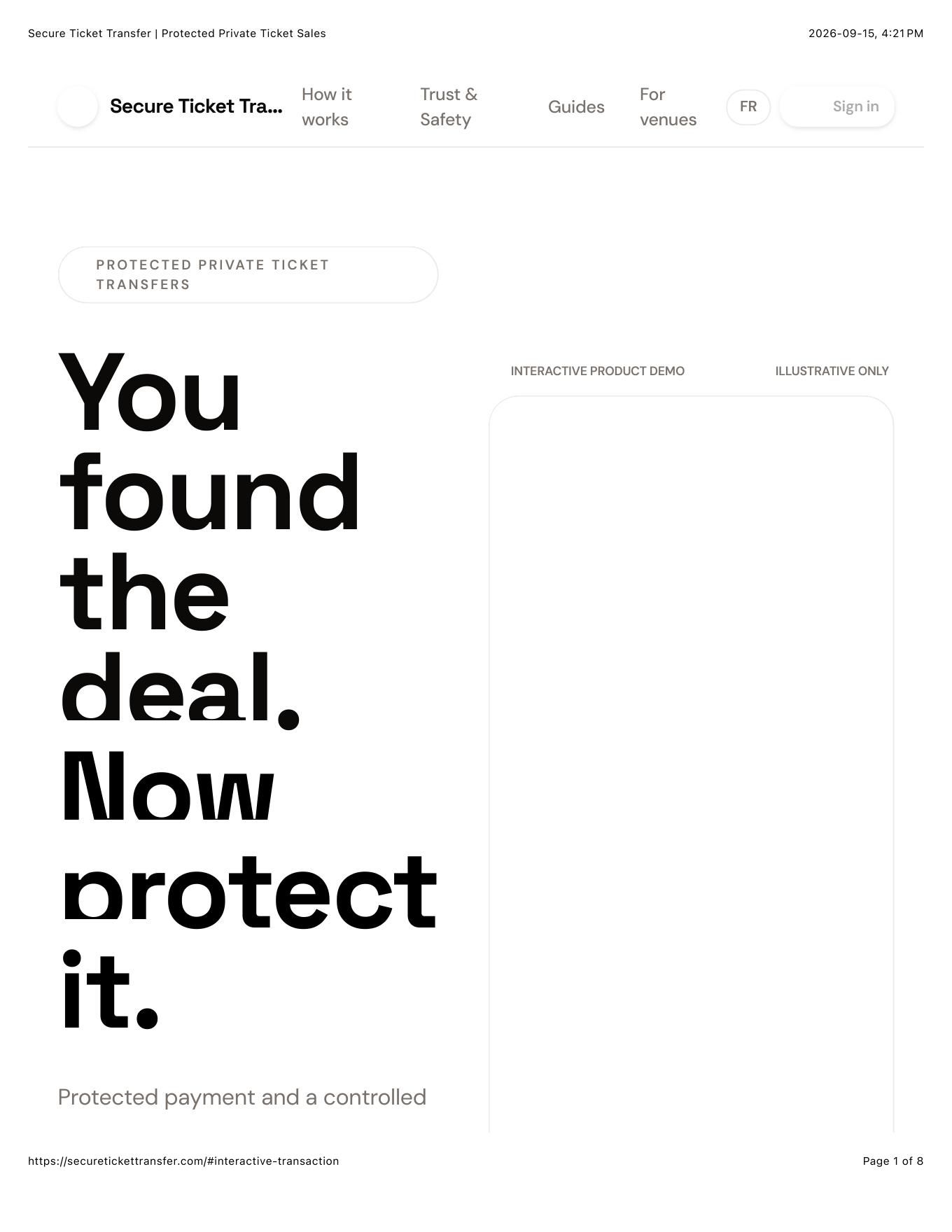
Explain a product where trust is the product.
Private ticket transactions create immediate questions. Who gets paid first? When should tickets be transferred? What happens if something goes wrong? How does the buyer know when to confirm? What protects the seller? The communication challenge was therefore not simply explaining features. The experience needed to make an unfamiliar transaction model understandable while clearly defining what the product does — and what it does not do.
Clarity → Understanding → Trust → Action
When a product coordinates money, identity, delivery, disputes, and payout, ambiguity becomes friction.
Don't just explain the product. Let prospects experience it.
Instead of relying entirely on paragraphs, diagrams, or feature lists, the product experience introduces an interactive transaction demonstration. Prospects can explore the transaction from both buyer and seller perspectives and see how payment, ticket transfer, confirmation, protection, and release relate to one another. This turns an abstract transaction model into something users can understand before they commit.
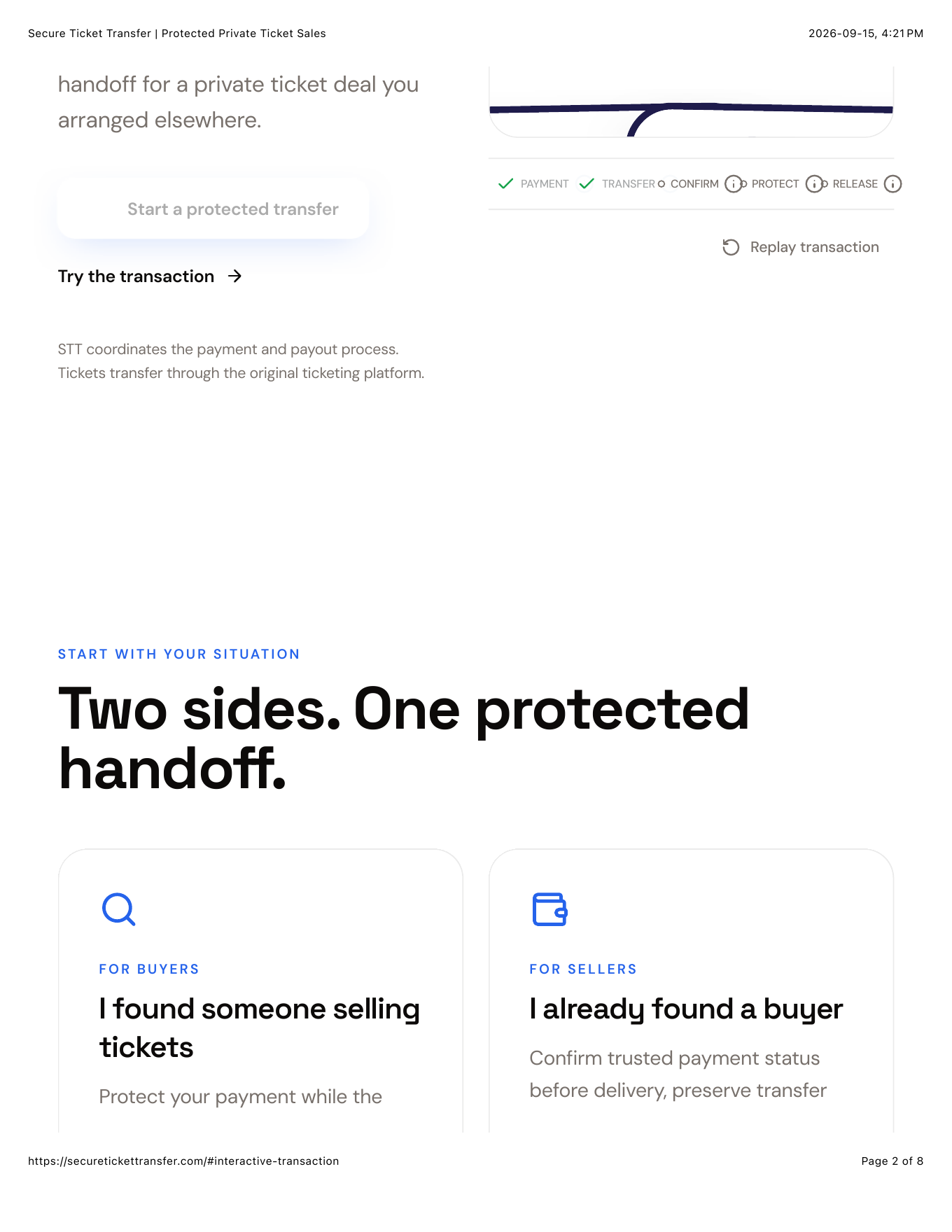
Show, then explain.
Interactive product education reduces the distance between reading about a product and understanding how it actually works.
Buyer perspective
Communicating what the buyer sees and controls.
Seller perspective
Making payment and delivery states understandable from the other side.
Transaction states
Turning a complex process into a visible sequence of actions and protections.
Complex systems become easier when the sequence is clear.
The transaction is broken into understandable stages so users can see where agreement, payment, issuer transfer, confirmation, protection, and payout fit into the process. Rather than hiding complexity, the content organizes it.
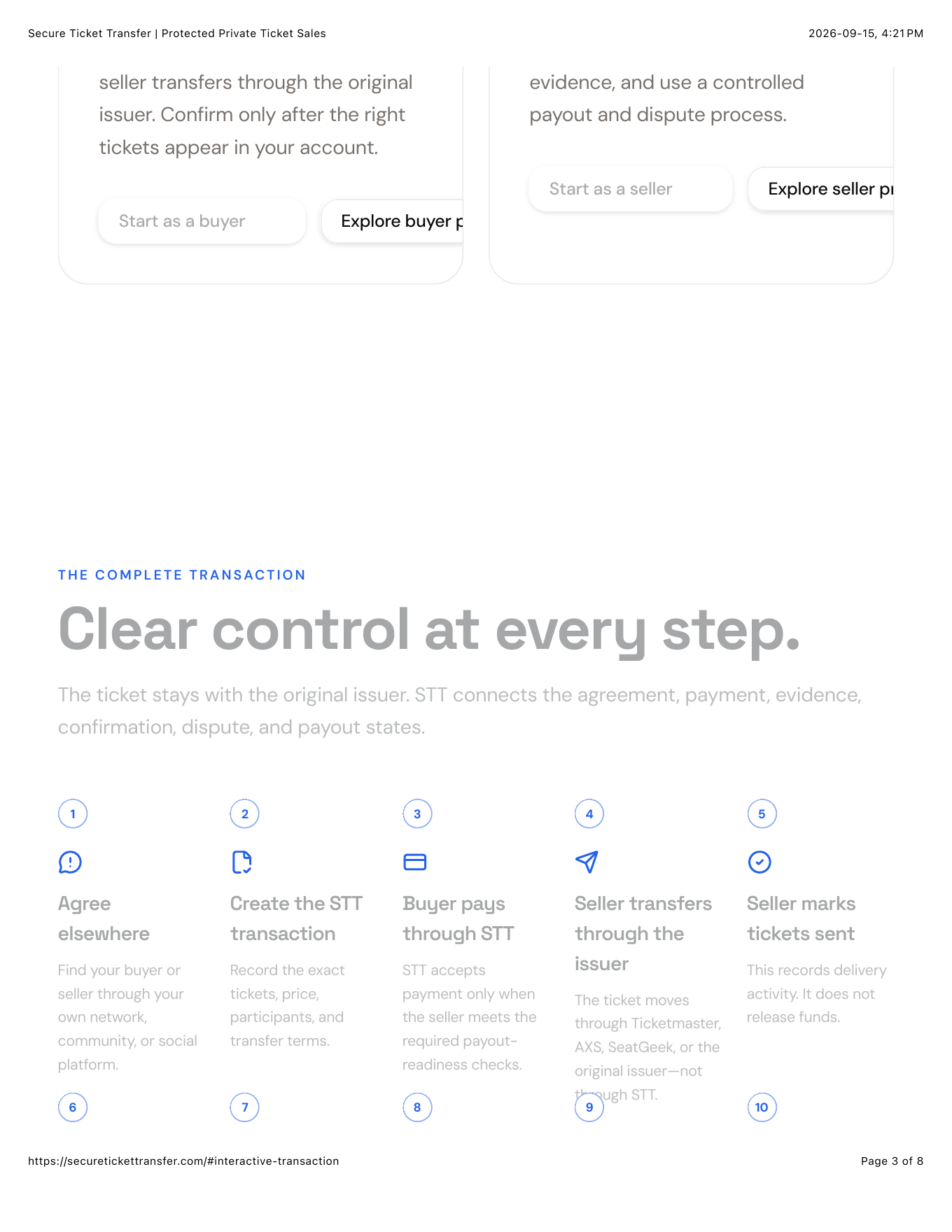
Good UX copy doesn't remove complexity.
It organizes it.
Precision matters when money and trust are involved.
Secure Ticket Transfer needed a clear category position. The product is not presented as another ticket marketplace. Instead, the messaging distinguishes the transaction layer from the marketplace where a buyer and seller originally find one another, and from the original ticket issuer responsible for transferring the ticket. That distinction allows the product to communicate its role without making broader claims than the system supports.
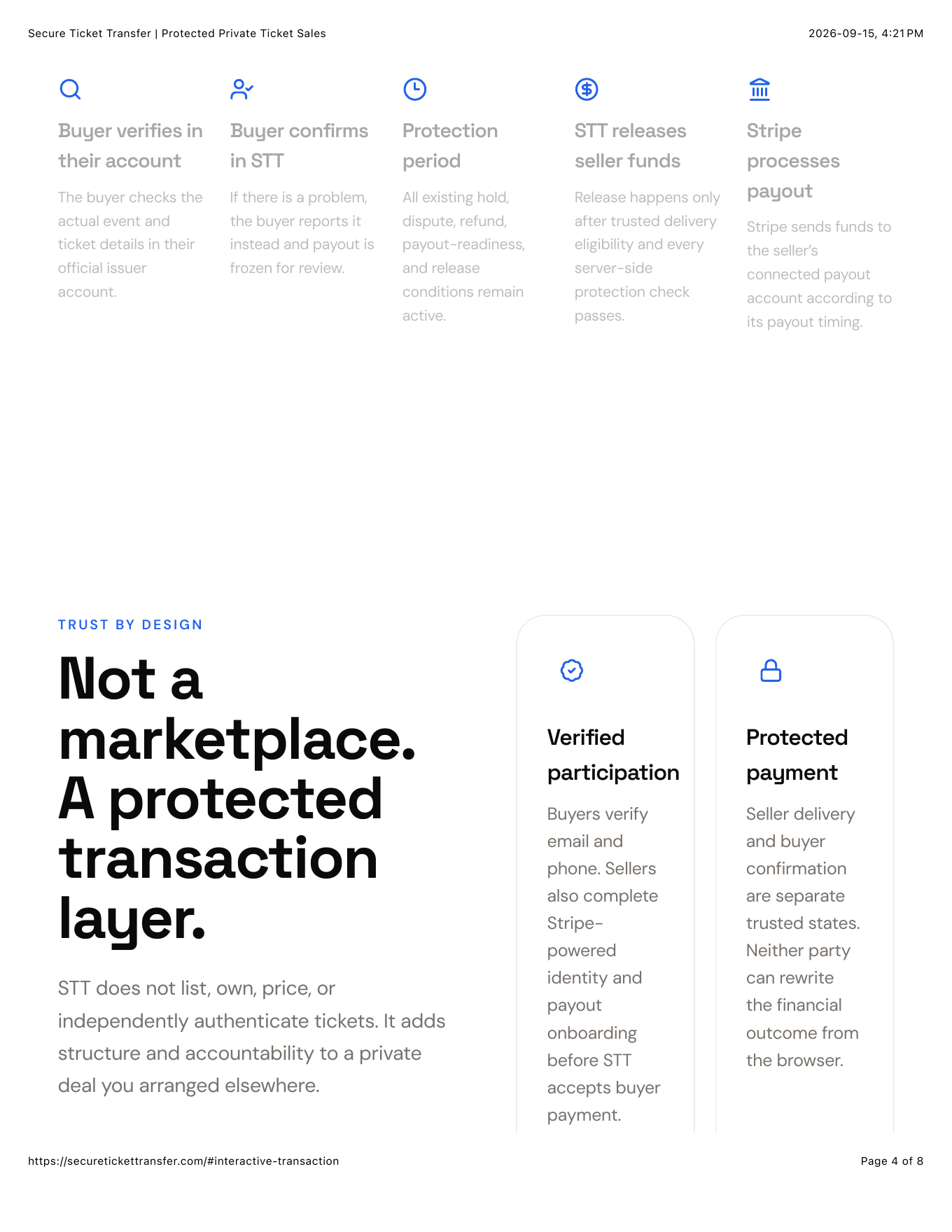
Category positioning
Defining what the product is in a crowded ticketing ecosystem.
Trust copy
Explaining protections without relying on vague reassurance.
Process clarity
Showing users what happens before, during, and after transfer.
Boundary communication
Clearly explaining what the platform controls and what remains with the original issuer.
SEO with somewhere to go.
Ranking is only the beginning. The content system is designed around questions prospective users are already asking when they encounter the exact problems Secure Ticket Transfer is built to address. Instead of publishing broad informational articles disconnected from the product, the resource center targets practical, high-intent questions surrounding private ticket transactions.
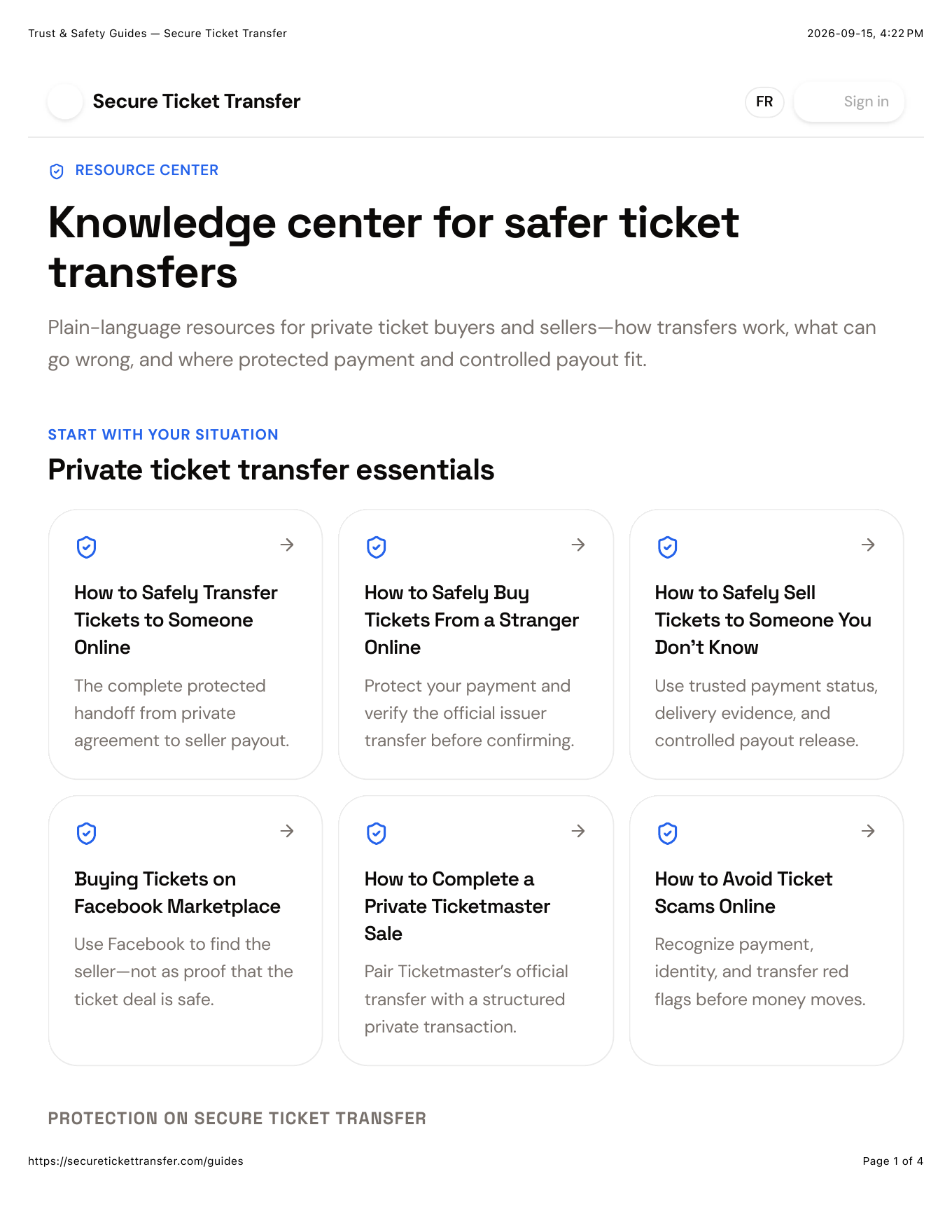
- “How to safely buy tickets from a stranger online”
- “How to safely sell tickets to someone you don't know”
- “Buying tickets on Facebook Marketplace”
- “How to complete a private Ticketmaster sale”
- “How to avoid ticket scams online”
Each piece begins by answering the searcher's immediate question. From there, the content can naturally introduce the risks involved, explain the safer transaction process, and provide a relevant path into the product.
The CTA is not bolted onto unrelated content. It is the logical next step.
Build around problems, not publishing quotas.
The resource library is organized around the different problems and concerns that appear throughout the customer's decision journey: buyer protection, seller protection, ticket transfers, scam prevention, protected payments, verified participation, and resale basics. This creates topic clusters with direct commercial relevance rather than a collection of disconnected blog posts.
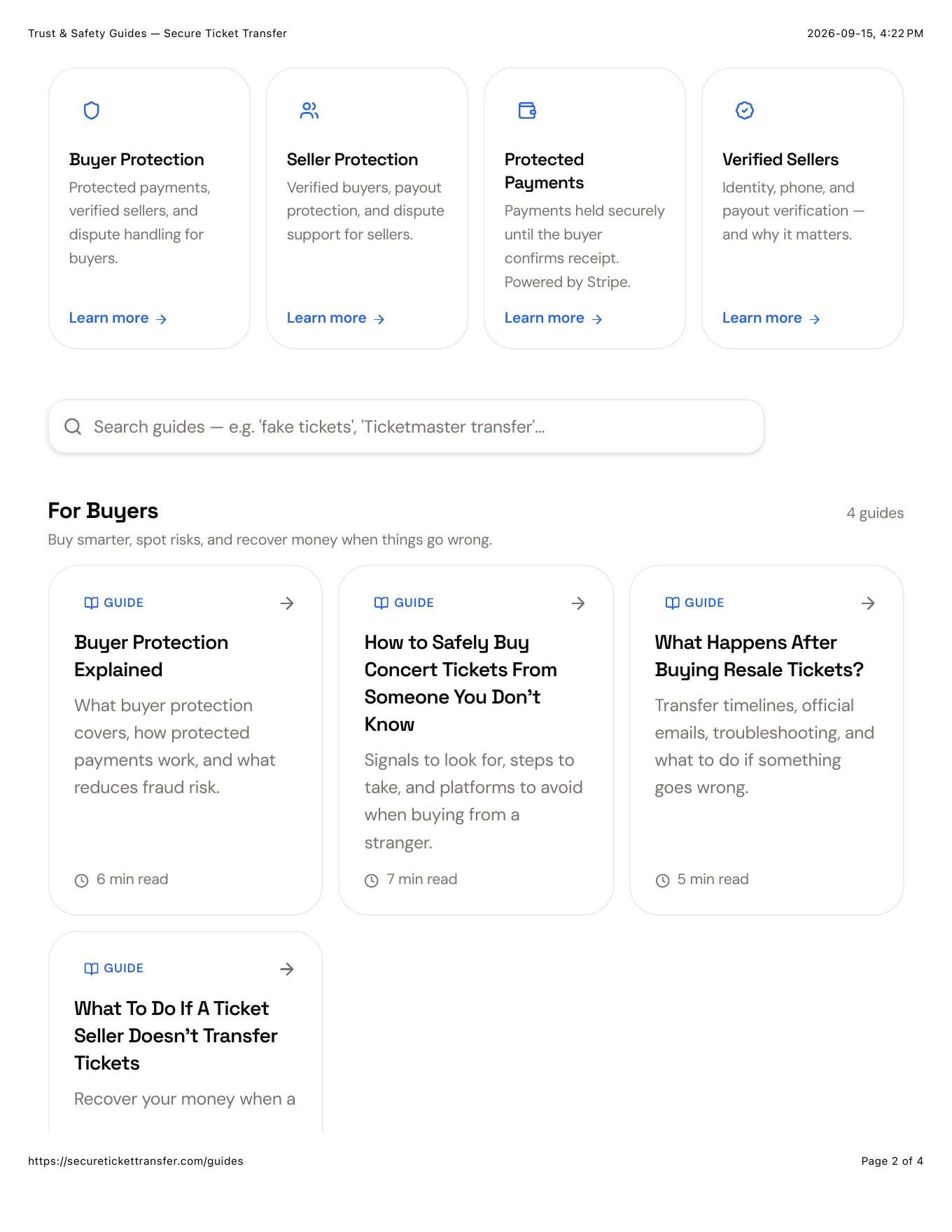
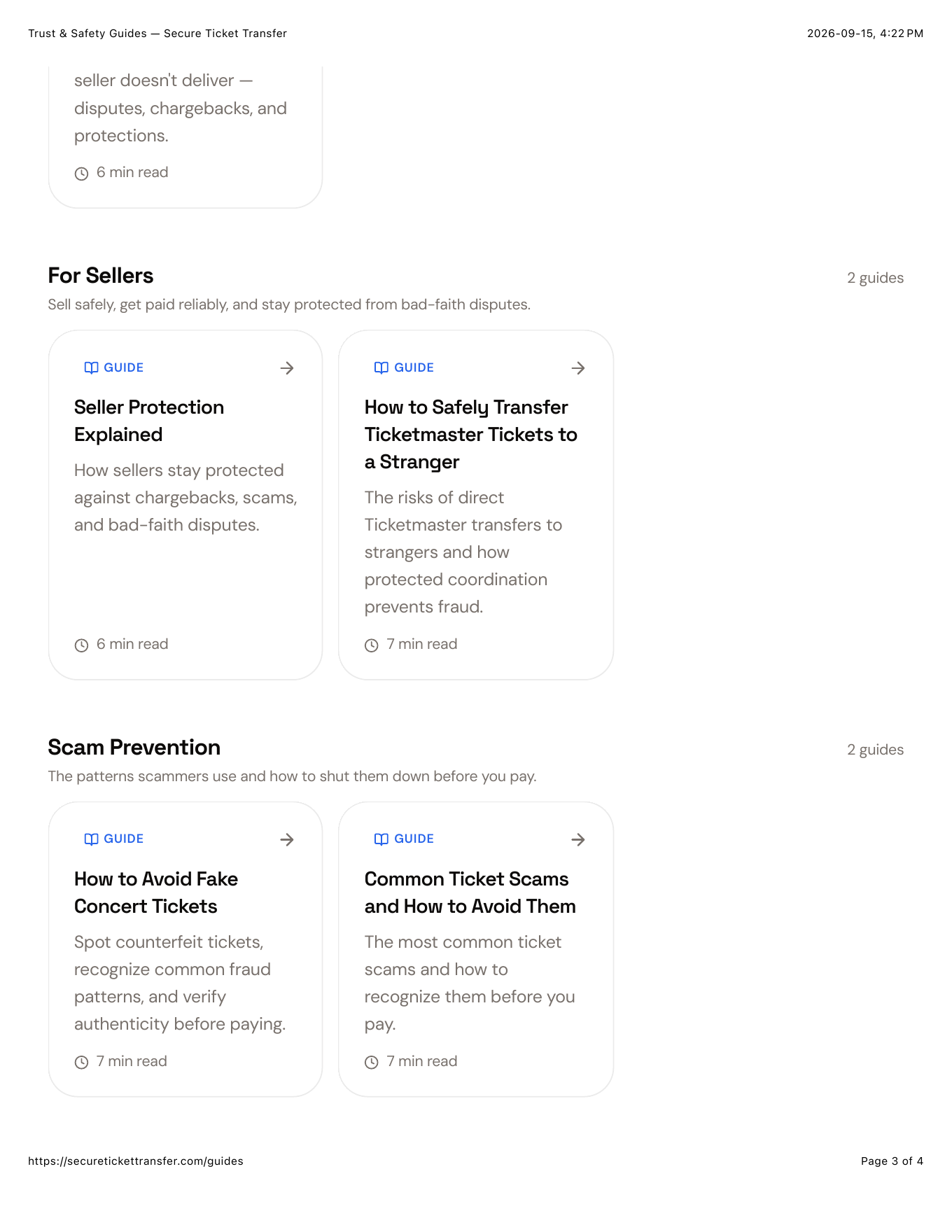
Every article has a job.
Answer the question. Build understanding. Create trust. Introduce the relevant product mechanism. Give the reader a logical next action.
Content should feed the product.
Capture intent
A prospect searches for an immediate problem.
Answer the question
Give them a useful, direct answer.
Explain the risk
Help them understand what can go wrong.
Introduce the mechanism
Show how a structured transaction addresses that problem.
Demonstrate the product
Let them understand the transaction experience.
Convert
Give them a relevant path to start a protected transfer.
Search → Education → Product → Action
Content built around the product.
Product positioning
Making a new or unfamiliar product category understandable.
Interactive product education
Using the interface itself to help prospects understand how the product works.
UX copy
Making transaction states, actions, risks, and next steps clear.
Search-intent strategy
Building content around the questions prospects are actively trying to solve.
SEO content systems
Creating interconnected content clusters with commercial relevance.
Conversion architecture
Connecting educational content to logical product actions instead of treating traffic as the end goal.
Traffic isn't the goal. Movement is.
Secure Ticket Transfer demonstrates how product positioning, UX copy, interactive education, and SEO content can work together as one acquisition system — moving a prospect from question to understanding to action.