Modern Holistic Living
A product transparency directory where the copy has one job: separate what is verified from what is merely claimed — without scaring the reader or overselling a product.
- Project
- Modern Holistic Living
- Scope
- Content system, directory copy, research modules
- Formats
- Category pages, product research, comparison tables
- Voice
- Evidence-first, calm, non-alarmist
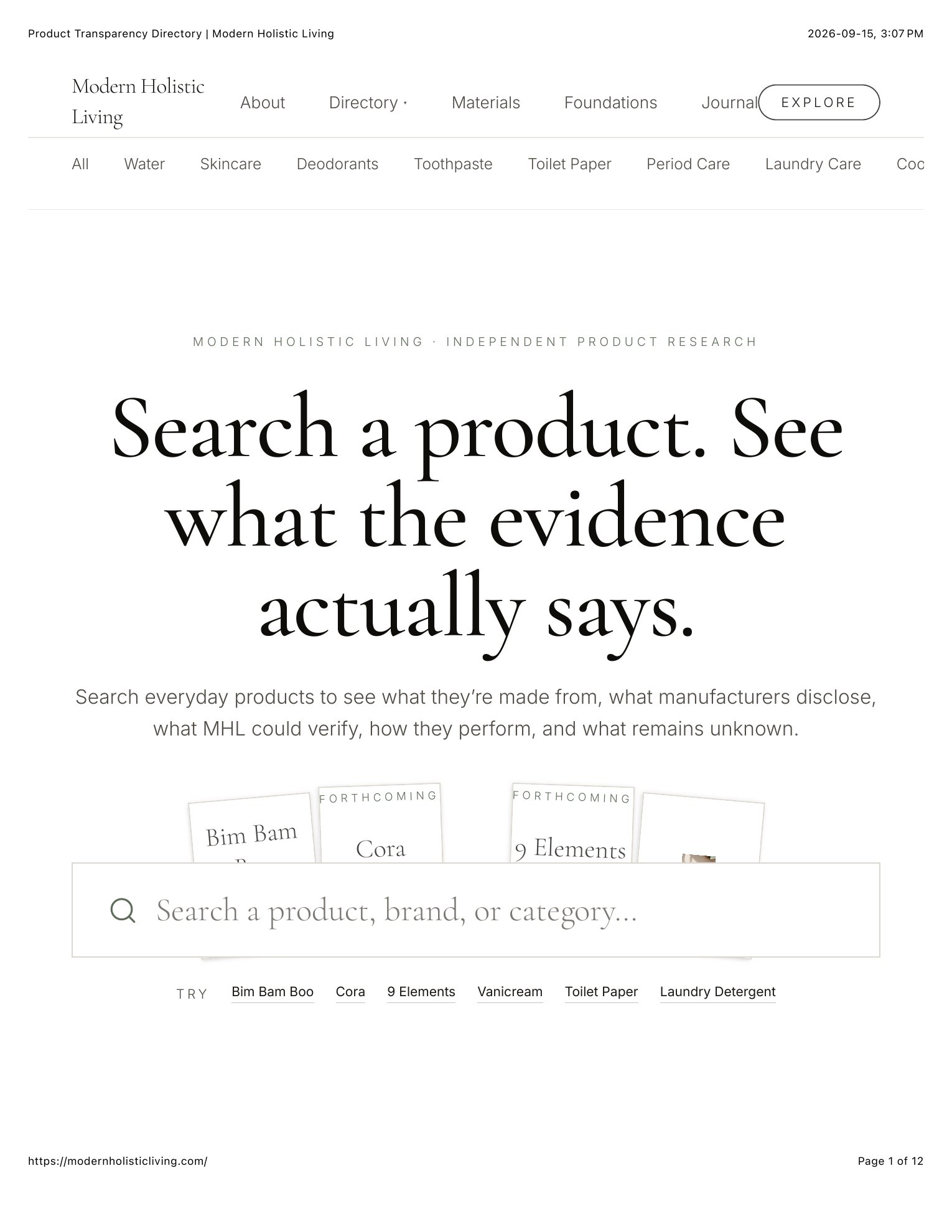
Non-toxic content is loud. This had to be quiet and credible.
The category is full of fear-driven listicles and affiliate roundups. The brief was the opposite: state what was documented, name what is still unknown, and let a reader make their own decision.
Trust before recommendation
Every page had to show the evidence standard before naming a favourite product.
One system, many categories
Water, skincare, cookware and more needed the same structure and the same tone.
Search intent, not slogans
Pages had to satisfy 'best non-toxic ___' searches without sounding like SEO filler.
A repeatable content architecture
Rather than writing pages one at a time, we defined a single template — category hero, evidence criteria, product research, comparison — then wrote the copy so any new category could drop straight into it.
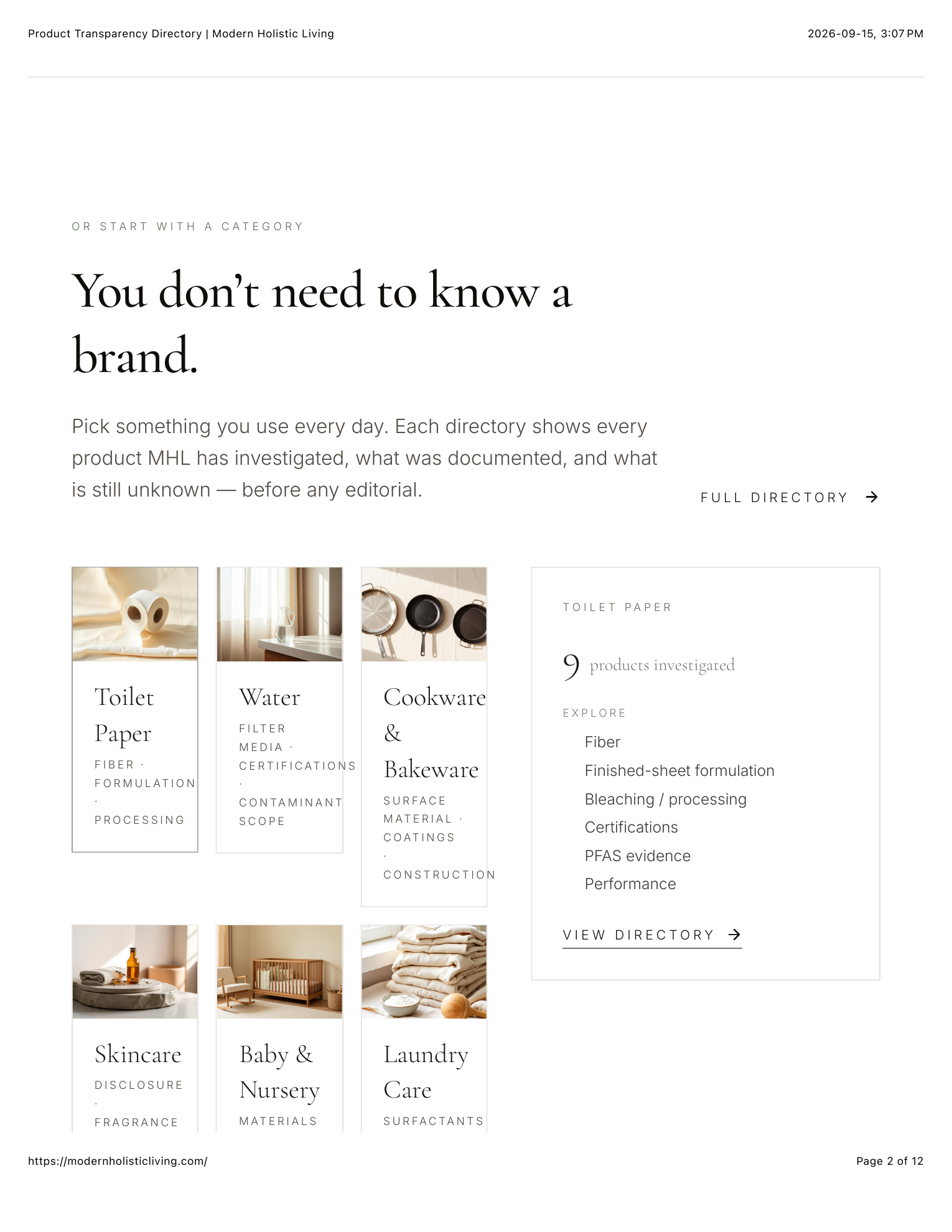
Category heroes that set the standard
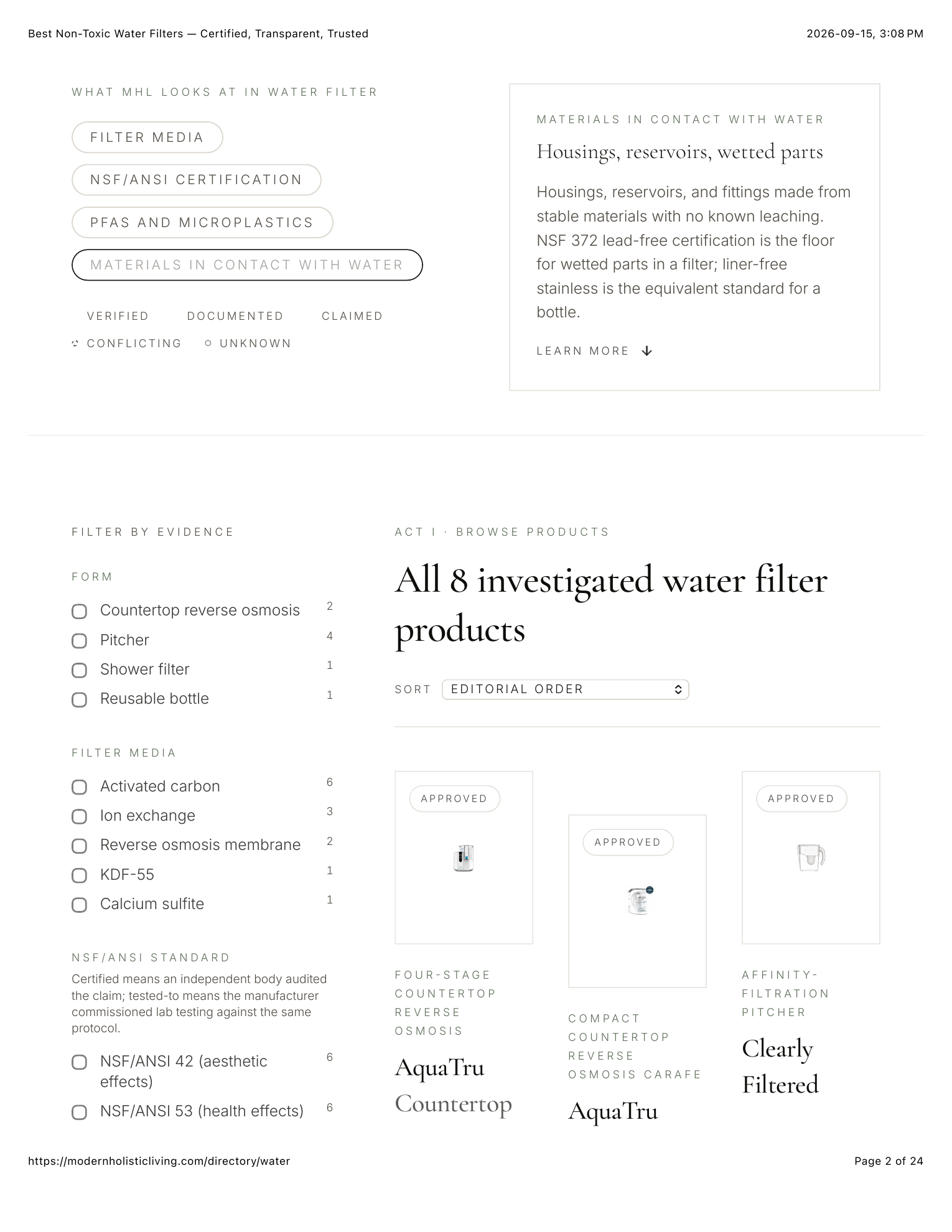
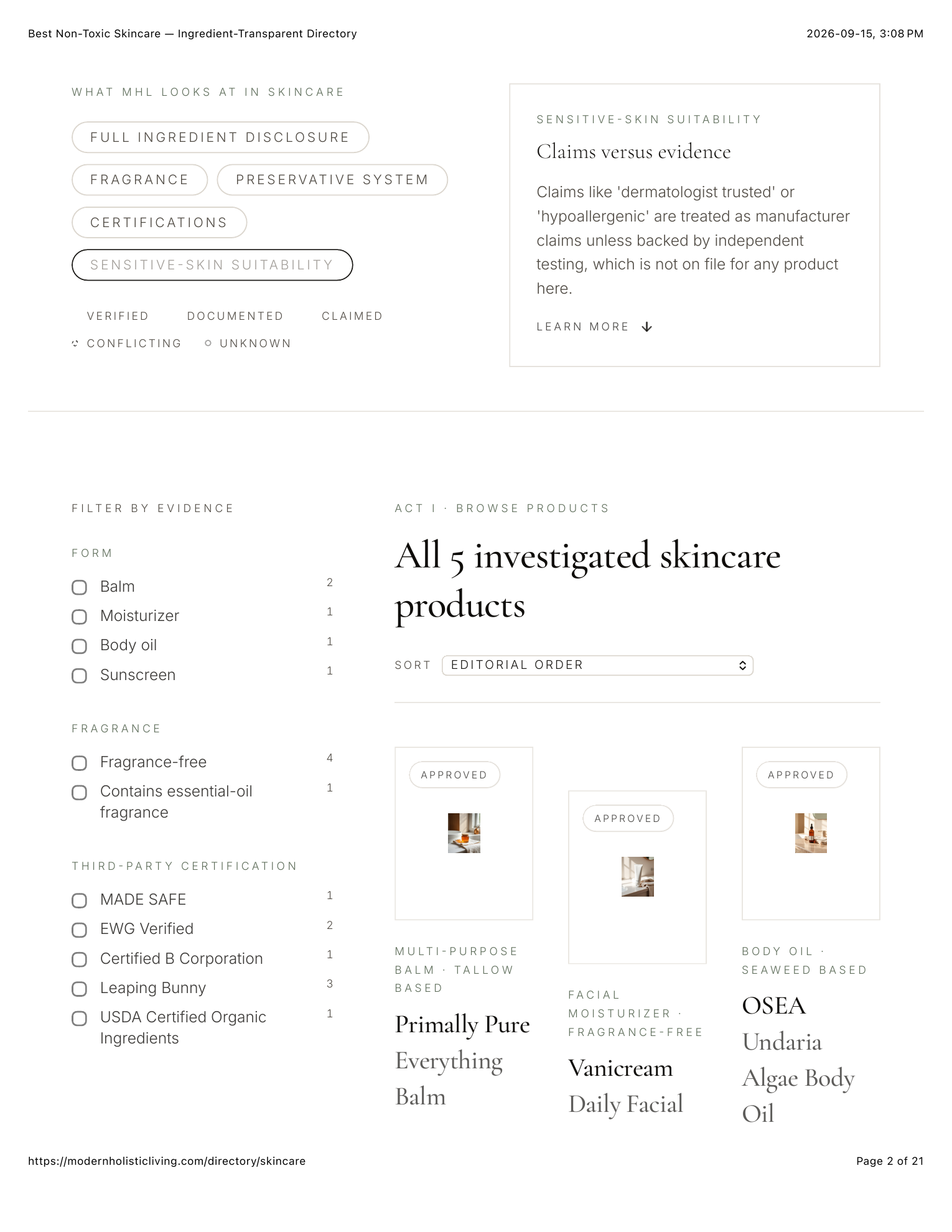
Each directory opens with what the category is judged on and a small set of honest counts — products investigated, approvals, certifications named. The numbers do the persuading, so the prose can stay plain.
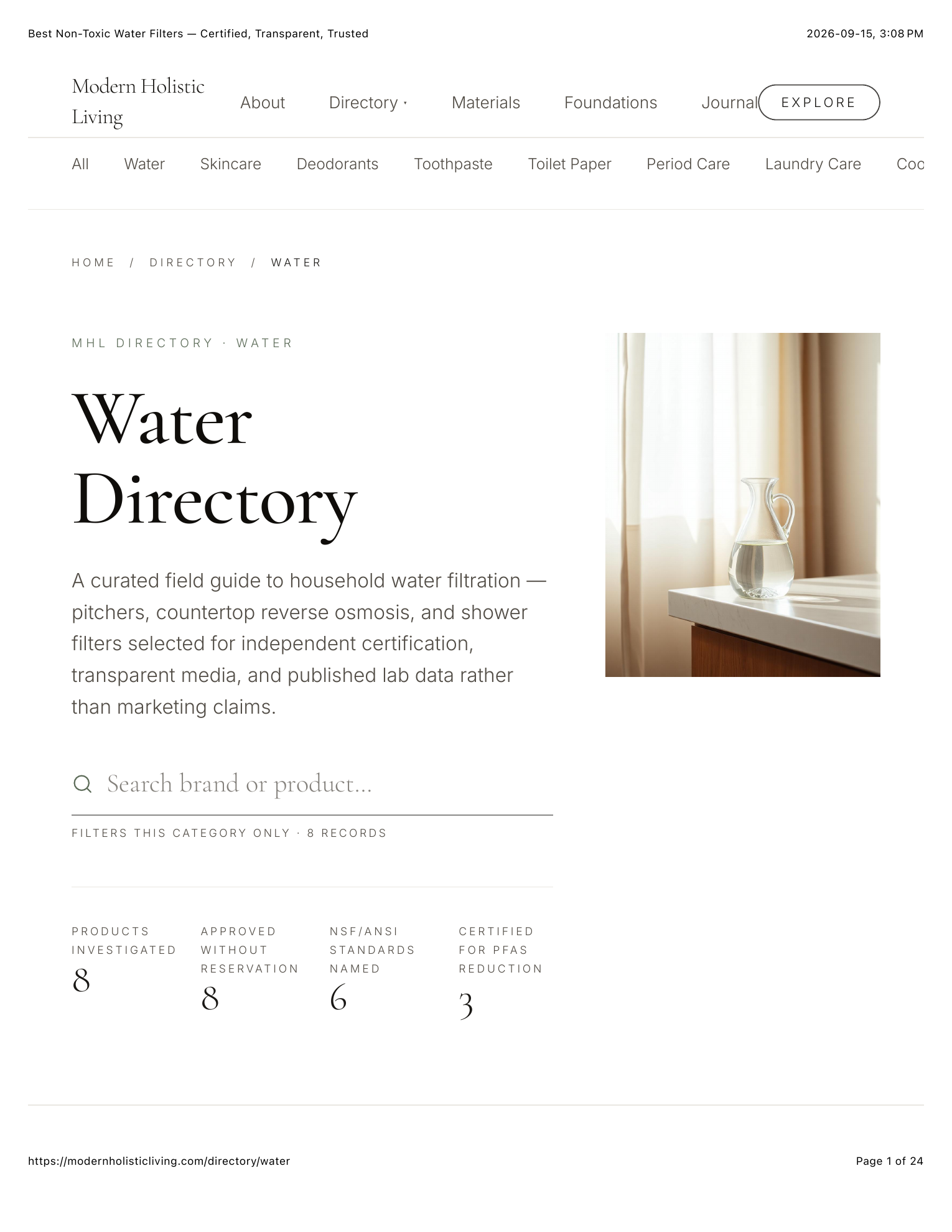
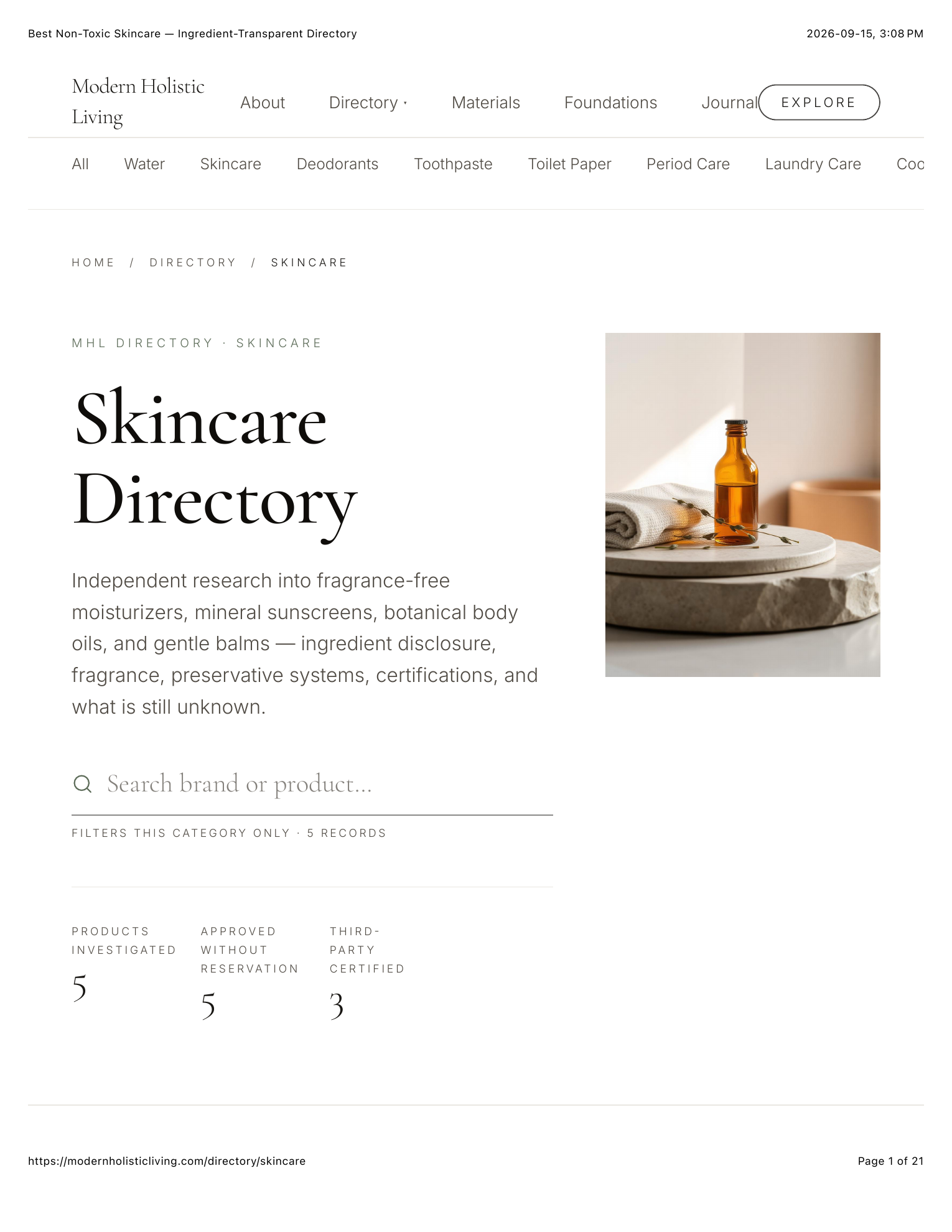
The same voice across every category
Skincare reuses the water structure line for line: what the research looks at, what is disclosed, what remains unknown. Consistency is what makes the directory feel like a reference rather than a blog.
Evidence, labelled honestly
Verified, documented, claimed, conflicting, unknown. Naming the evidence level in the copy — instead of implying certainty — is the whole positioning of the brand in a single row of labels.
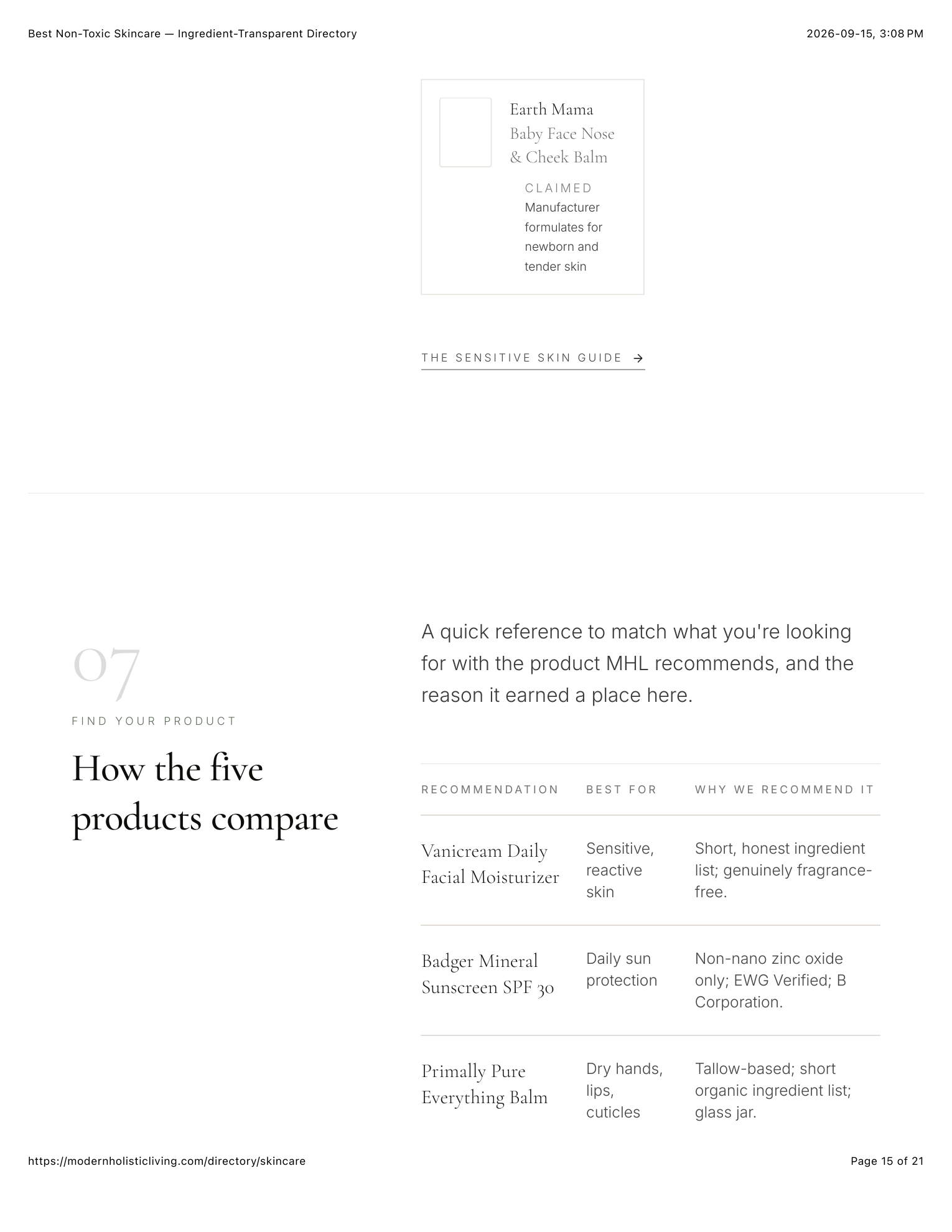
One line per product, no hedging
The comparison table is the hardest writing on the site: a recommendation, who it is for, and the single reason it earned a place — each in a handful of words a reader can scan without doubt.
Content built as infrastructure.
Content strategy
A consistent editorial position that separates documented evidence from product claims.
Scalable architecture
Repeatable structures for categories, product research, comparisons, and educational resources.
Research-driven copy
Plain-language explanations that preserve nuance without adding fear or false certainty.
Search & discovery
A discovery layer that helps users navigate products, categories, research, and supporting educational content as the library grows.
A content system a small team can keep shipping
The result is a library that grows without a rewrite: new categories inherit the structure, the evidence labels, and the tone. That is the same way we work with subscription clients — define the system once, then move quickly inside it.
Want a content system like this for your brand? Submit requests as they come up and we work through your queue — most first drafts arrive within 24–48 hours.